
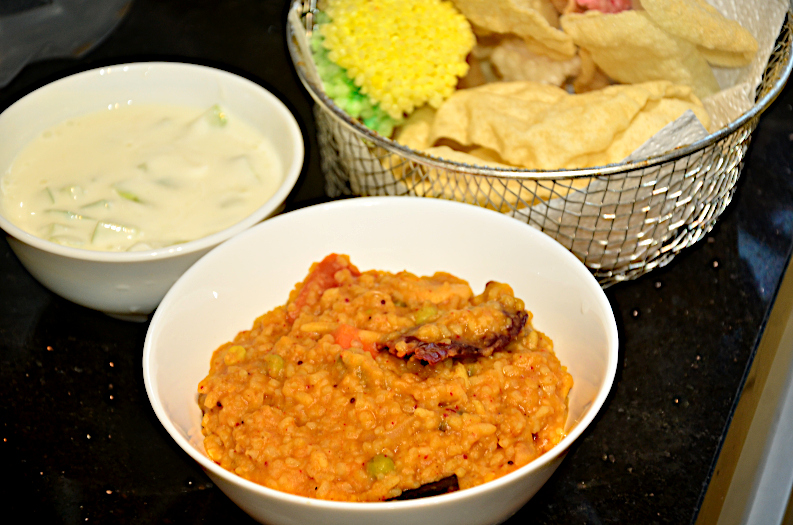
Bisibele bath is a special dish from Karnataka made using rice, lentil, Tamarind extract, mixed veggies and a special spice powder. Bisi translates to hot, and as the name suggests this dish has to be served hot and with ghee.
The spice powder is the main ingredient required to make this dish. Bisibele bath masala powder is readily available in most of the Indian stores nowadays but nothing compares to the home made spice powder mix. This particular spice powder recipe was given to me by my house maid, Anita back in Bangalore. Her bisibele bath and vegetable pulav tastes amazing. Most of the ingredients required to make this spice powders are readily available in most of the Indian kitchens, exception being the marathi moggu. Marathi moggu almost resembles cloves but has a different flavour. This is very important to make the spice powder for bisibele bath. I could not find it here in London, so decided to skip it and use the other ingredients. Also I have used dessicated coconut instead of copra (dried coconut) for the spice powder but Anita says that for maximum flavour copra has to be used.
Bisibele bath tastes best when hot and when served with some raita, chips, poppadams(appalams) or as served in some dakshinis (restaurants in bangalore) with spicy boondi.
So lets have a look at the recipe shall we?
INGREDIENTS
Serves – 4-5
Rice Dal mix
- Rice – 1 cup
- Toor Dal – ½ cup
- Salt – to taste
- Turmeric powder – ¼ tsp
- Water – 5 cups
Bisi bele bath masala powder
- Coriander seeds – ¼ cup
- Channa dal – 2 tbsp
- Urad dal – ½ tbsp
- Kashmiri red chillies – 5
- Guntur chillies – 5-6
- Cumin – ½ tsp
- Peppercorn – 10-12
- Green Cardamom – 2
- Cinanamon – 1 inch
- Cloves – 3
- Dessicated Coconut/ Dried Coconut – 2 tbsp
- Poppy seeds – 1.5 tsp
- White Sesame seeds – 1.5 tsp
- Mace – 1
- Marathi Moggu – 3
- Fenugreek – Small pinch
- Asafoetida – ½ tsp
Vegetable mix
- Mixed Vegetables – 2.5 cups (I used a mix of carrots, peas, beans, green capsicum, brinjal/aubergines, potatoes)
- Shallots – 5-6 roughly chopped
- Tomato – 1 large, cubed
- Water – to cook the vegetables
- Tamarind extract – ¼ cup, thick
- Bisibele bath masala powder – 3.5 tbsp
To Temper
- Mustard seeds – 1.5 tsp
- Peanuts – a small handful
- Cashews – a small handful
- Asafoetida – a small pinch
- Ghee – 3-4 tbsp
- Red chillies – 3
- Curry leaves – 2 sprigs
METHOD
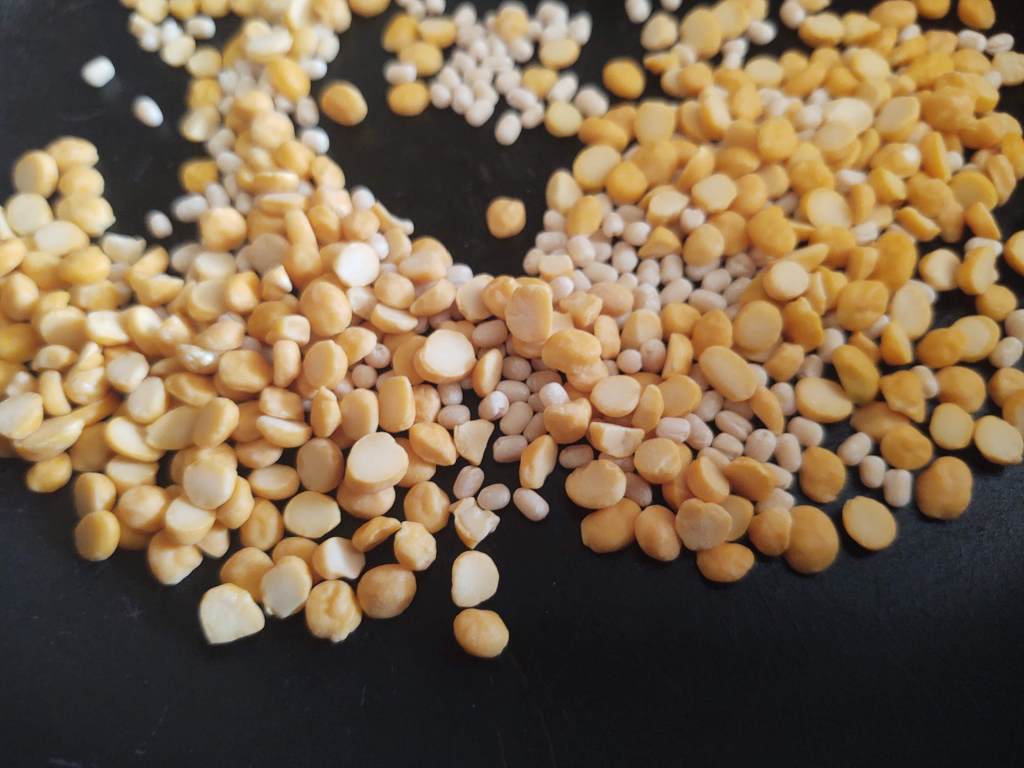
1.Heat a pan and dry roast the channa dal and urad dal till they turn aromatic and start changing color. Take if off the pan and transfer to a plate for cooling down.
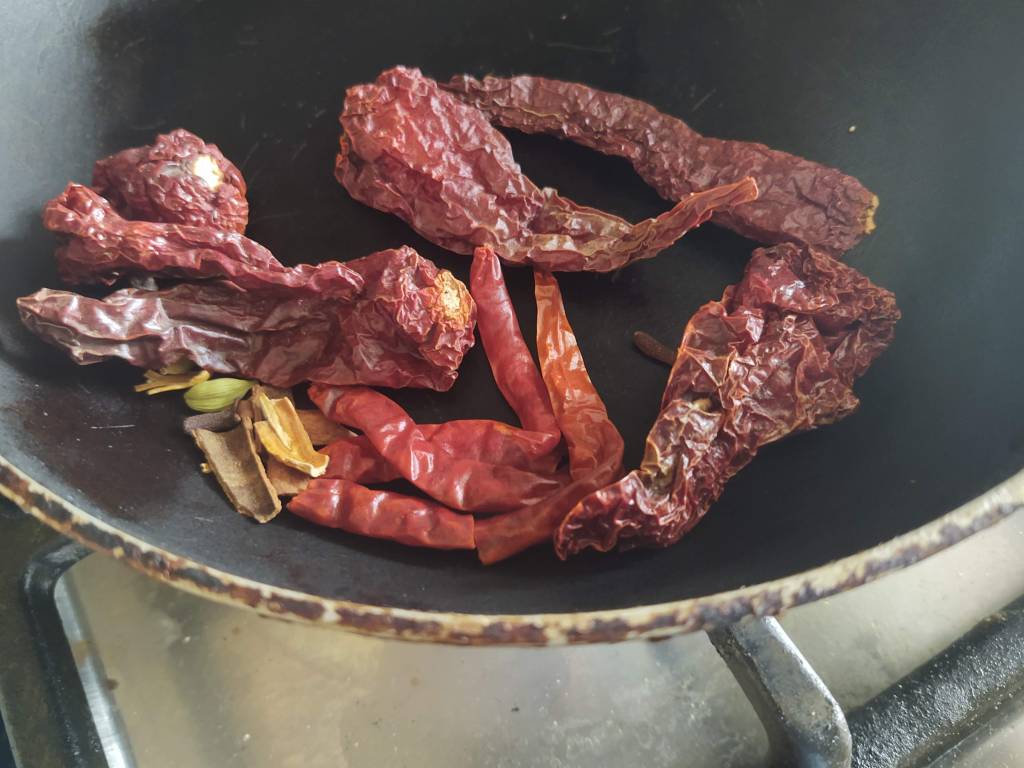
2.Also dry roast the red chillies, cardamom, mace, peppercorn, fenugreek seeds, cloves, cinnamon, marathi moggu till the whole mix turns aromatic.
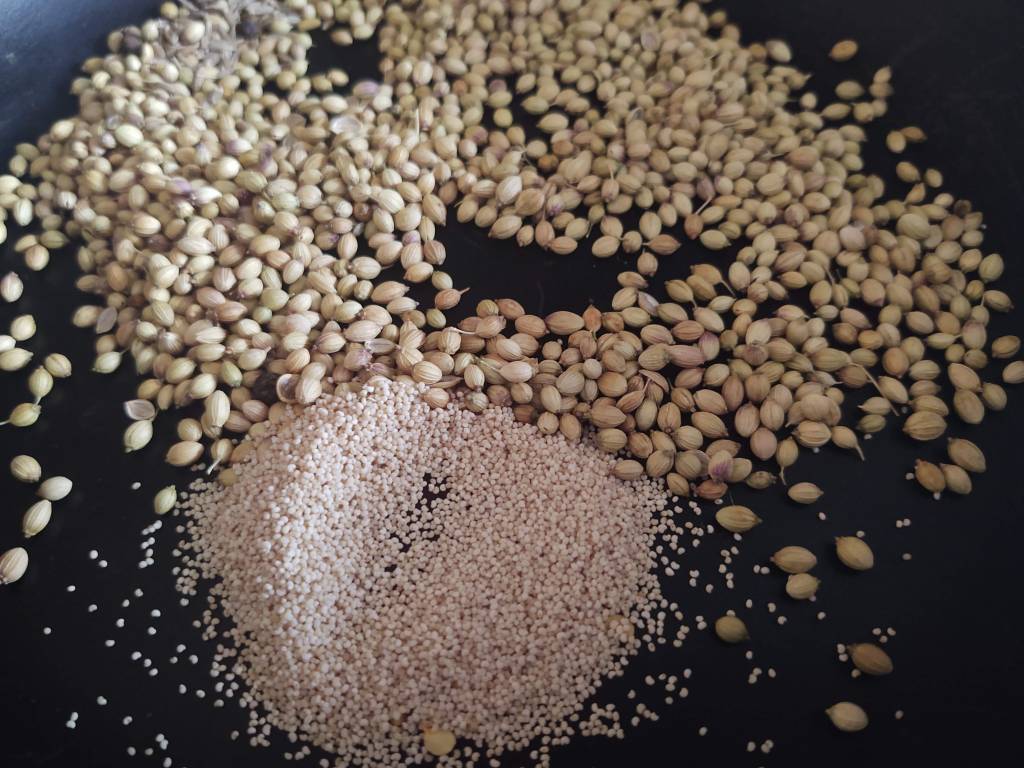
3.Dry roast the poppy seeds and coriander seeds till they start changing color.
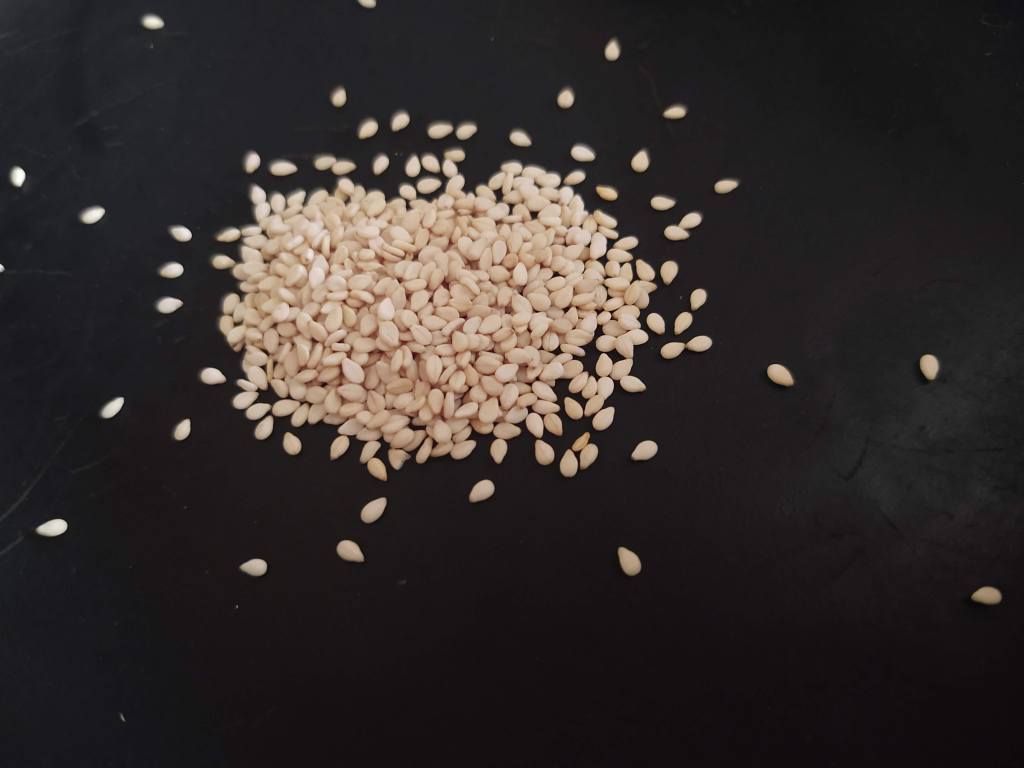
4.Also dry roast sesame seeds till they crackle.
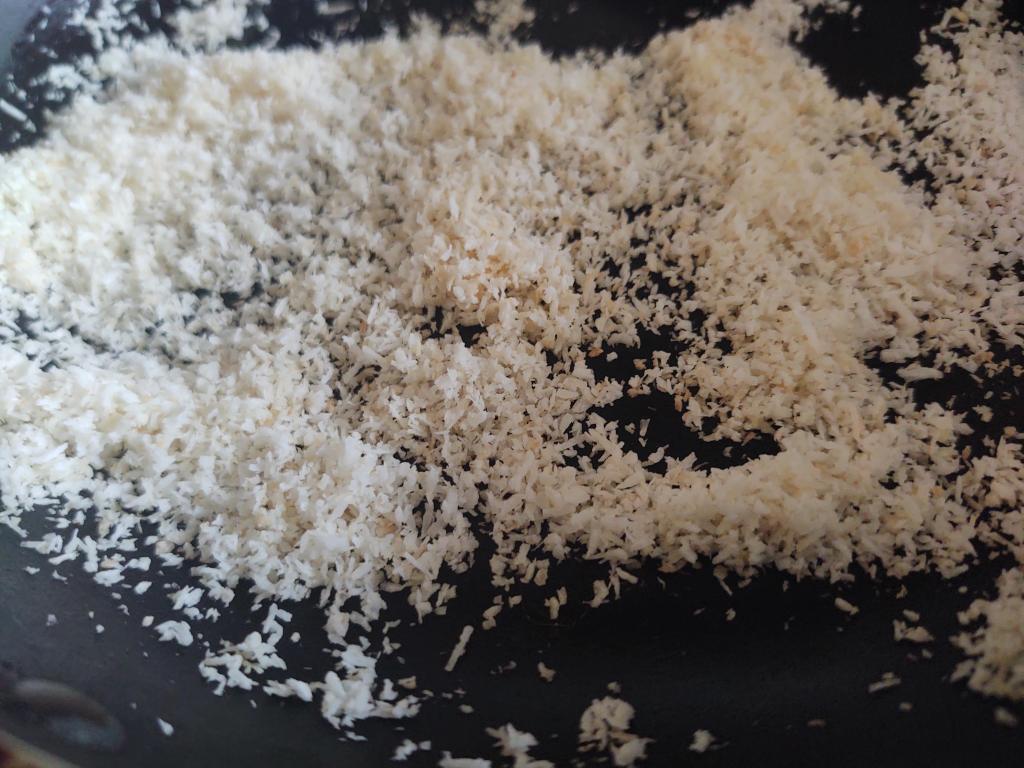
5.Finally dry roast the dessicated coconut till it turns brown.
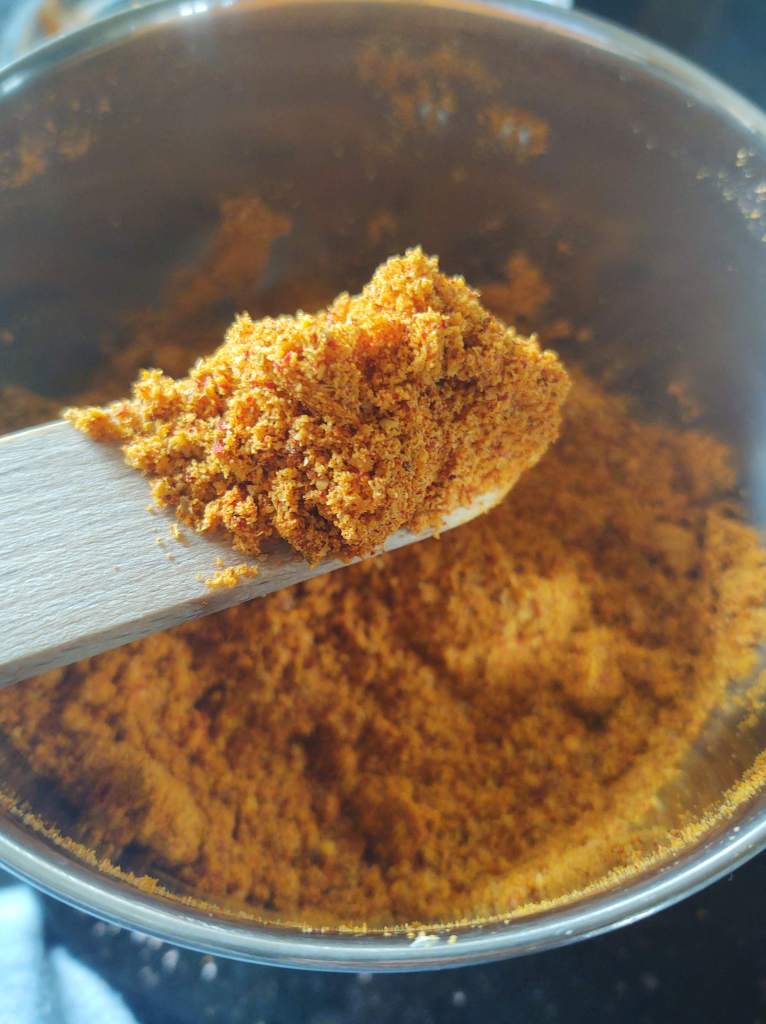
6.Let all the roasted ingredients cool down and grind to a smooth powder. Transfer to a glass bottle.
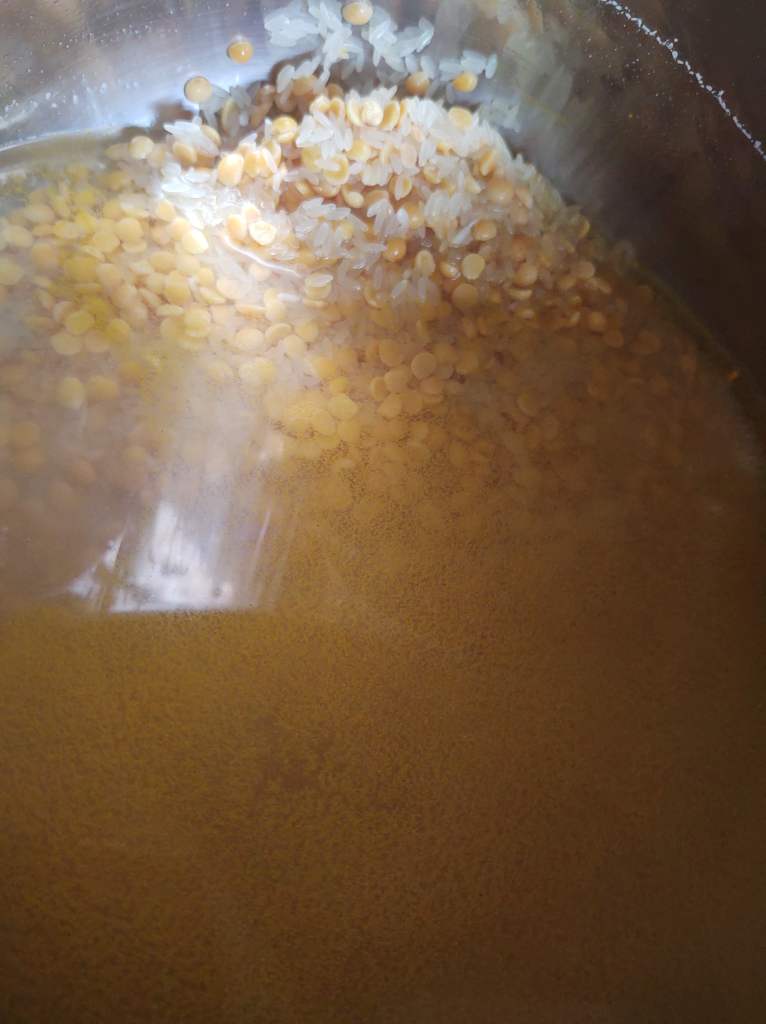
7.Wash the rice and dal, soak for about 15 minutes and pressure cook for 3 whistles with salt and turmeric powder.
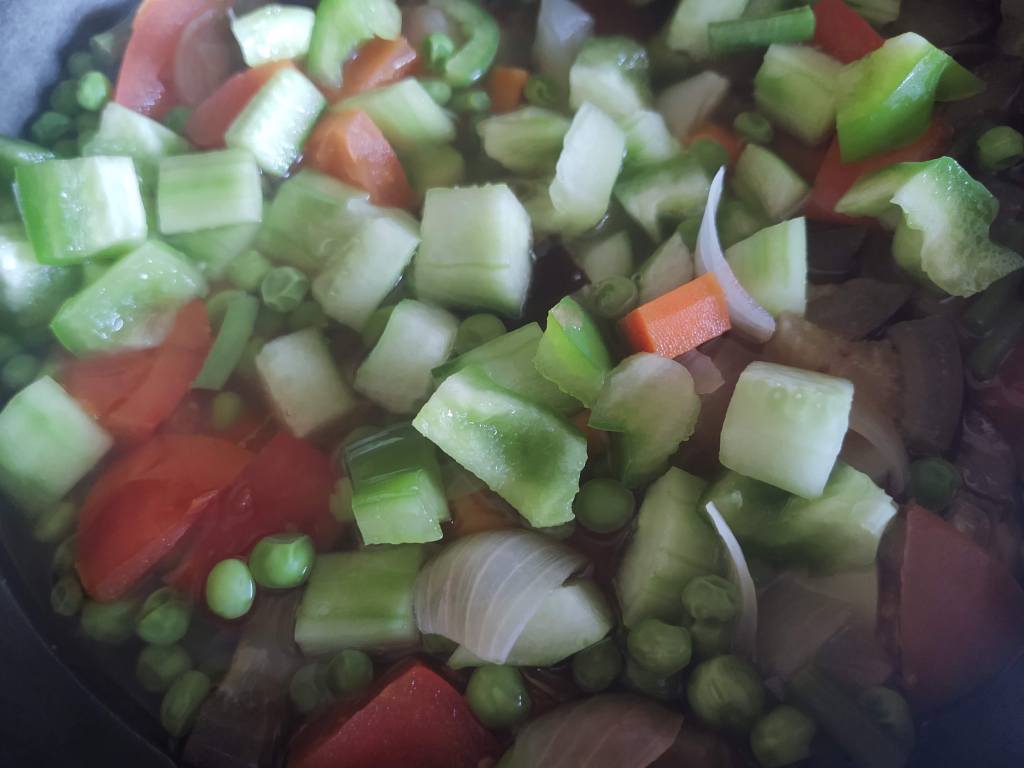
8.Chop the vegetables and cook in sufficient water till they are 80% cooked.
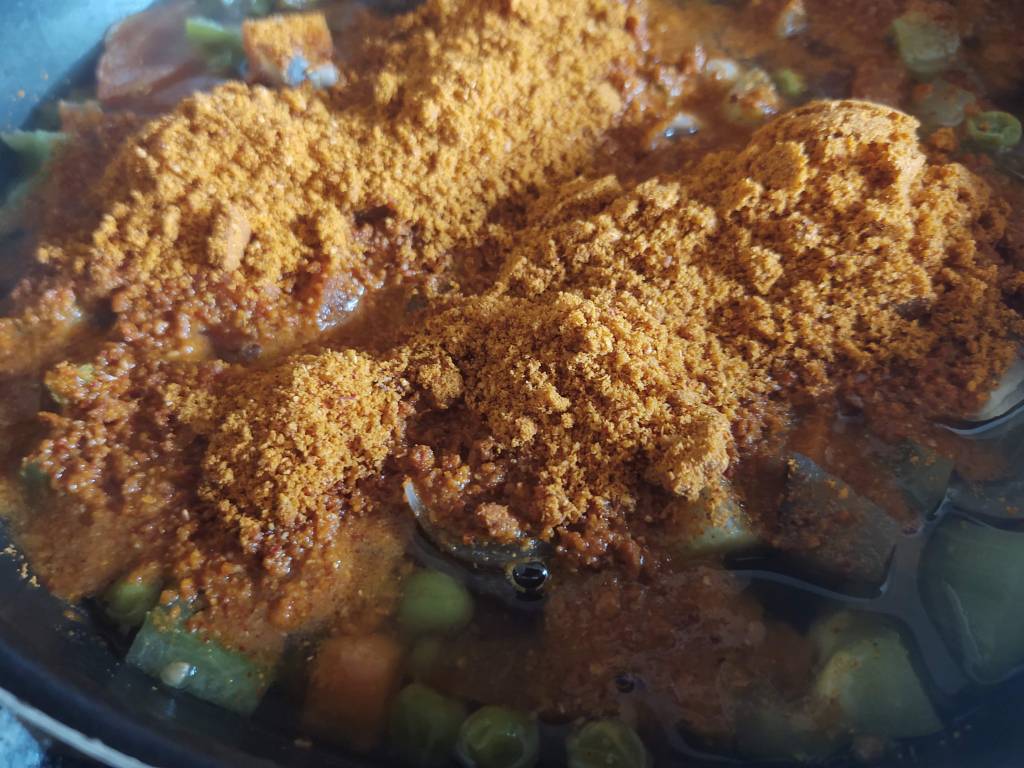
9.Add in the tamarind extract and the bisibele bath masala powder and cook for 4-5 minutes.
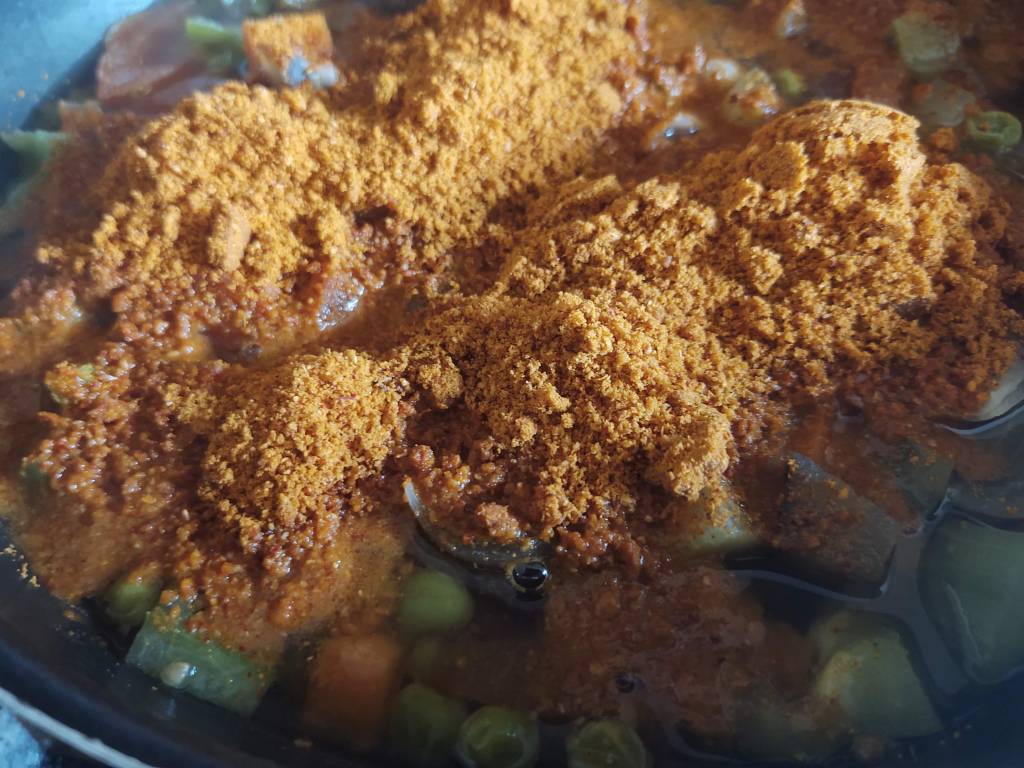
10.Once cooked add the veggie mix to the cooked rice and dal. Add some hot water to this mix and check for salt.
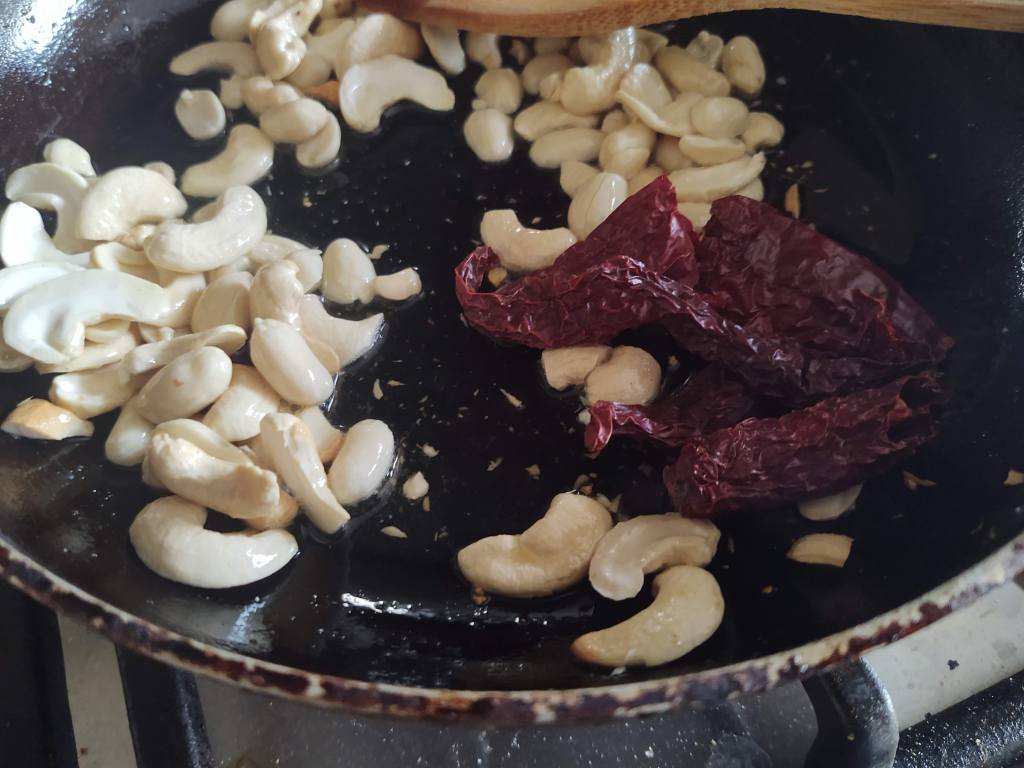
11.Heat some ghee in a pan, fry the peanuts and cashew nuts till they turn light brown.
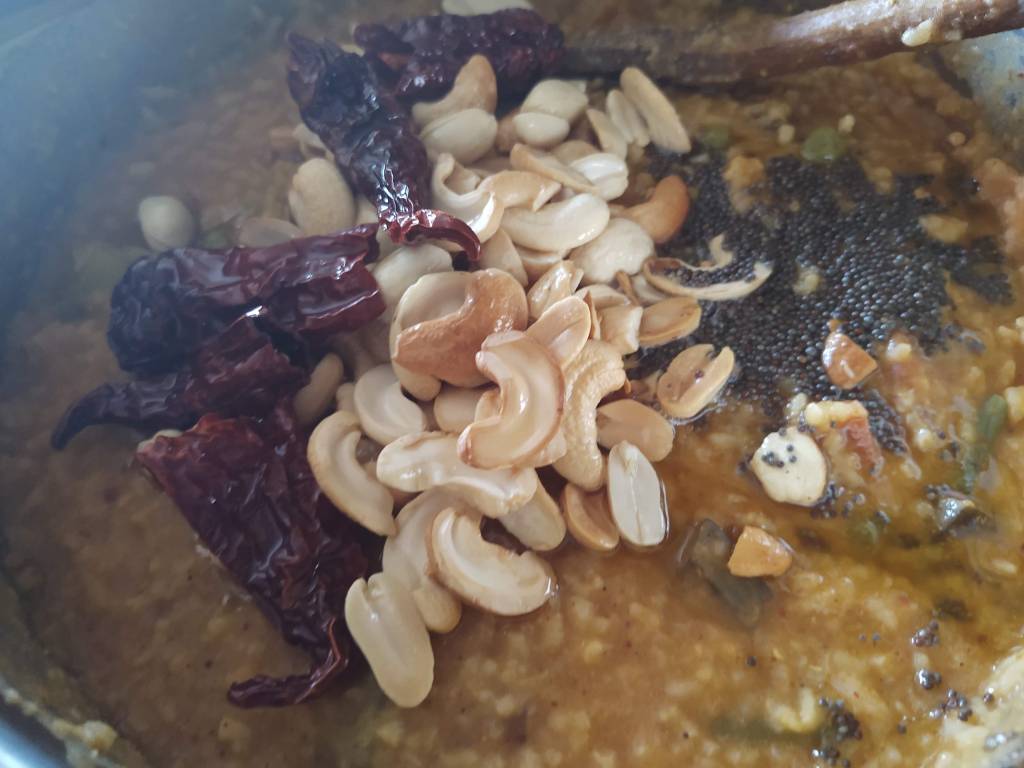
12.Also temper the remaining ingredients listed under to temper list and add to the rice, dal and vegetable mix.
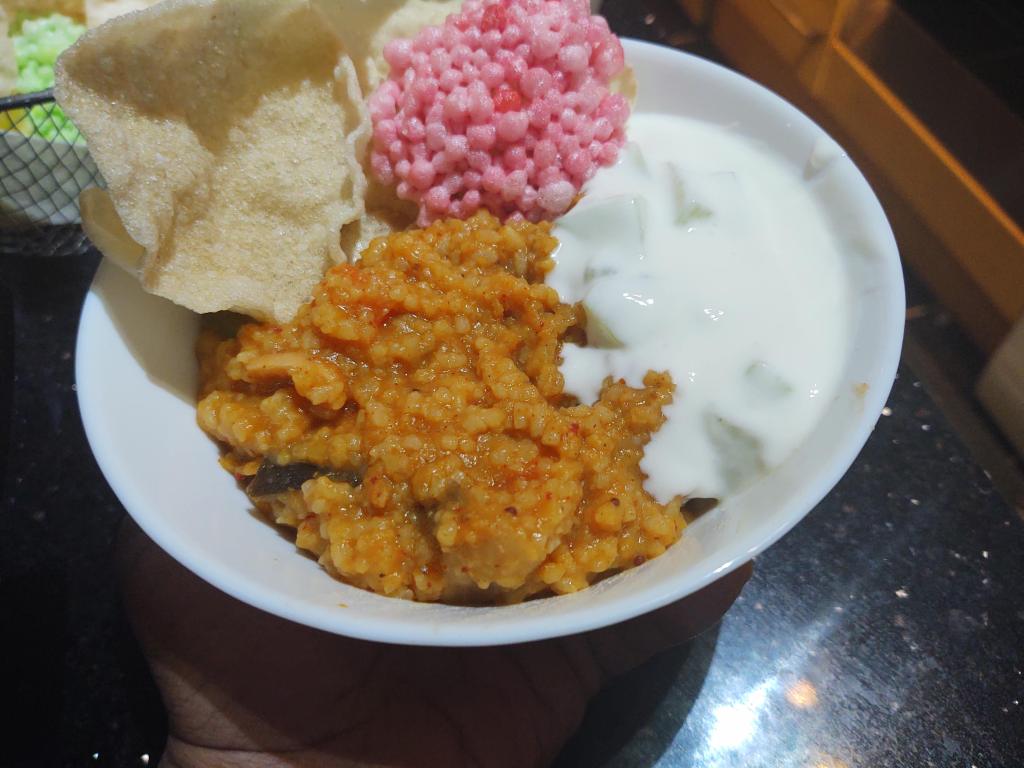
13.Mix well and serve hot with raita, boondi, applam/chips.
NOTES
- The bisibele bath has to always be served hot.
- Don’t be too stingy with the ghee and the nuts. The more ghee the better.
- Bisibele bath tends to thicken as it cools down, so don’t worry if its runny. If its too thick while preparing adjust by adding some hot water.
- Be free to use any combination of veggies. Ones used frequently are carrots, beans, peas, capsicum, chayote squash, drumstick, potatoes, kohl rabi, cucumber and aubergines.
- If you have access to the marathi moggu, use it or else it can be eliminated.
- Also the dessicated coconut and copra (dried coconut) can be used interchangeably. But maximum flavour is obtained when you use the dried coconut/copra.
 The Greedy Tummy